Source Nitrile Rubber Rectangle Ring Parts for Seals
Find 30 nitrile rubber rectangle ring parts for industrial sealing applications. Compare specifications including hardness, certifications, and customization options from verified Chinese manufacturers to identify suitable suppliers for your procurement needs; compare the available evidence and request quotations based on your requirements.
Key considerations
Products List




Comprehensive Sourcing Guide
Nitrile Rubber Rectangle Ring Parts Sourcing Guide
Sourcing nitrile rubber rectangle ring parts requires a disciplined approach to material selection and geometric precision, as these components serve critical sealing functions in dynamic and static applications. Buyers must recognize that while the core keyword emphasizes rectangular profiles, the market also includes O-ring variants and other custom shapes that may be listed under similar search terms. Understanding the distinction between standard off-the-shelf inventory and fully customized OEM solutions is the first step in defining procurement requirements. This guide provides evidence-based insights to help procurement professionals navigate supplier capabilities, verify technical specifications, and mitigate supply chain risks associated with rubber sealing components.
The procurement landscape for these parts is characterized by significant variability in customization options, material formulations, and production lead times. Suppliers often offer personalized development on performance requests, allowing buyers to tailor hardness, chemical resistance, and temperature tolerance to specific operational environments. However, this flexibility introduces complexity in quality assurance and contract management. Buyers should prioritize suppliers who demonstrate robust engineering support and clear communication channels, ensuring that design intent is accurately translated into physical product specifications without compromising structural integrity or sealing performance.
Product Scope and Observed Listing Signals
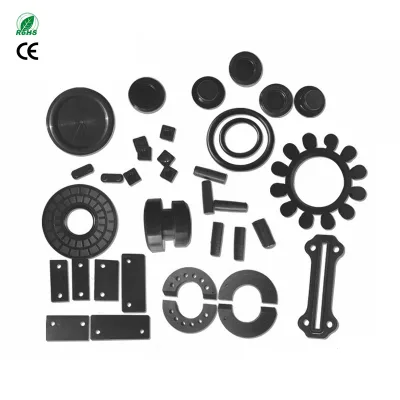
The observed product listings reveal a diverse range of rubber sealing solutions, including O-rings, dust seals, rotary seals, and piston spacers, indicating that many suppliers offer comprehensive sealing portfolios rather than specialized rectangular ring-only catalogs. Key attributes such as material composition, primarily Nitrile Butadiene Rubber (NBR), and hardness ranges from soft to 20-90 Shore A are frequently highlighted, providing buyers with initial indicators of suitability for their specific mechanical and chemical requirements. These signals suggest that buyers should verify the exact cross-section shape and material grade, as generic listings may not always reflect the precise rectangular profile needed for high-pressure or high-friction applications.
Packaging and origin data further clarify the operational context of these suppliers, with many products originating from Fujian and Guangzhou in China, packed in polybags, cartons, or custom cases upon request. The presence of certifications such as FDA, CE, LFGB, and IATF16949 in some listings points to suppliers capable of serving regulated industries like food processing, automotive, and consumer goods. Buyers should carefully cross-reference these observed signals with their own compliance needs, noting that not every listed product satisfies all standards, and that specific certifications may apply only to certain product lines or material batches rather than the entire supplier catalog.
Technical Specifications to Verify
Verifying the exact cross-section geometry is paramount, as rectangle rings must maintain precise dimensional tolerances to ensure effective sealing against extrusion and leakage under pressure. Buyers should request detailed engineering drawings or CAD files to confirm the width, height, and corner radii of the rectangular profile, ensuring compatibility with existing gland designs and mating surfaces. Additionally, the hardness specification, often ranging from 20 to 90 Shore A, must be validated against the application’s load-bearing requirements, as softer compounds may offer better conformability but lower resistance to extrusion, while harder compounds provide better structural support but may compromise sealing in uneven gaps.
Material formulation and chemical resistance are equally critical, with NBR being a common choice for oil and fuel resistance, though specific compound variations can significantly alter performance. Buyers should inquire about the rubber formula’s personalized development capabilities, asking for technical data sheets that detail compression set, tensile strength, and elongation at break. It is also essential to verify the operating temperature range and resistance to specific fluids, as generic NBR may not suffice for extreme environments. Confirming these technical parameters through supplier documentation or third-party testing ensures that the selected parts will perform reliably throughout their intended service life.
Compliance and Safety Documentation
Compliance documentation serves as a vital risk mitigation tool, particularly when sourcing from international suppliers where regulatory frameworks may differ from the buyer’s home market. Buyers should request copies of relevant certifications, such as ISO 9001 for quality management, IATF16949 for automotive quality systems, and material-specific tests like RoHS, REACH, and PAHs to ensure environmental and safety standards are met. These documents provide evidence that the supplier adheres to recognized quality and environmental protocols, reducing the likelihood of non-conforming products entering the supply chain and helping buyers meet their own corporate sustainability and regulatory obligations.
In addition to broad certifications, specific product testing reports should be reviewed to verify material composition and performance claims. Buyers should ask for test results related to compression set, oil resistance, and tensile strength, ensuring that the data aligns with industry standards such as ASTM D2000 or ISO specifications relevant to the application. It is crucial to confirm that the certifications and test reports are current and issued by accredited laboratories, as outdated or self-declared claims may not accurately reflect the product’s actual compliance status. Maintaining a complete audit trail of these documents facilitates smoother inspections and reduces potential delays during customs clearance or customer audits.
Cost Drivers and Commercial Terms
Cost structures for nitrile rubber rectangle rings are influenced by several factors, including material grade, hardness, dimensional complexity, and order volume. Customized profiles and specialized rubber formulas typically incur higher tooling and setup costs, which may be amortized over larger production runs. Buyers should negotiate clear pricing tiers based on quantity, understanding that smaller orders may carry a premium due to fixed overheads, while larger volumes can benefit from economies of scale. Additionally, the choice of packaging, such as standard polybags versus custom carton cases, can impact unit costs and logistics efficiency, so aligning packaging requirements with shipping methods is essential for cost optimization.
Commercial terms, including payment structures and lead times, play a significant role in cash flow management and supply chain reliability. Common terms involve a deposit before production and a balance upon delivery, with lead times ranging from approximately 7 to 20 days depending on order size and customization level. Buyers should clarify these terms upfront, ensuring that payment milestones are tied to verifiable production stages or quality inspections. Furthermore, understanding the supplier’s capacity for handling rush orders and their policies for handling defects or delays is crucial for maintaining production continuity and minimizing the financial impact of supply chain disruptions.
Supplier Qualification and Quality Control
Supplier qualification extends beyond initial capability assessments to include rigorous evaluation of their quality control processes and traceability systems. Buyers should verify that suppliers implement in-plant inspections such as First Article Inspection (FAI), In-Process Quality Control (IPQC), and Outgoing Quality Control (OQC) to catch defects early in the production cycle. Additionally, the presence of traceability features, such as batch number coding via V codes, allows for precise tracking of materials and production runs, facilitating rapid response to any quality issues. These practices demonstrate a supplier’s commitment to consistency and accountability, reducing the risk of receiving non-conforming batches.
Evaluating a supplier’s engineering and innovation capabilities is also important, particularly for long-term partnerships. Suppliers offering OEM optimization, ODM services, and patented processing equipment may provide greater value through design improvements and cost-saving suggestions. Buyers should assess the supplier’s ability to handle complex geometries and specialized material requirements, as well as their responsiveness to technical queries. Establishing a clear communication protocol for design changes and quality feedback ensures that both parties remain aligned throughout the product lifecycle, fostering a collaborative environment that supports continuous improvement and operational efficiency.
Long-Term Procurement Checks
Long-term procurement success depends on establishing robust mechanisms for ongoing performance monitoring and supplier relationship management. Buyers should conduct periodic audits of supplier quality systems, reviewing their adherence to agreed-upon standards and their ability to maintain consistent product quality over time. Regular feedback loops, including joint reviews of defect rates and delivery performance, help identify areas for improvement and reinforce accountability. Additionally, maintaining a diversified supplier base can mitigate risks associated with single-source dependencies, ensuring continuity of supply even if one supplier encounters operational challenges or capacity constraints.
Continuous evaluation of market trends and technological advancements is also essential for staying competitive. Buyers should stay informed about new rubber formulations, sealing technologies, and regulatory changes that may impact their sourcing strategy. Engaging with suppliers on future product development and exploring opportunities for cost reduction through design standardization or material optimization can drive long-term value. By proactively managing these aspects, buyers can build resilient supply chains that adapt to changing business needs while maintaining high standards of quality, compliance, and cost-effectiveness.
FAQs
What materials are used for nitrile rubber rectangle ring parts?
These parts are primarily made from NBR material, which offers excellent oil resistance. The hardness ranges from 20 to 90 Shore A to suit various applications. Customized rubber formulas can be developed to meet specific performance requests for your unique industrial needs.
Can I get customized dimensions for these rubber seals?
Yes, customization is available for size and shape to match your specific drawing requirements. The product model can be customized as a rubber piston spacer or other forms. You can request specific dimensions, ensuring the final product fits your machinery perfectly without standard limitations.
Which certifications do these rubber products hold?
The products hold multiple certifications including FDA, CE, LFGB, CIQ, EEC, and ISO. Some items also meet IATF16949 standards for automotive applications. Test reports cover RoHS, Reach, and other safety standards to ensure compliance with international regulations for your specific market requirements.
How long is the lead time for production?
The production lead time is typically about 7 to 15 days for standard orders. Some customized items may require a production period of 15 to 20 days depending on complexity. This timeline allows for efficient manufacturing while maintaining quality control through in-plant inspections like FAI and OQC.
What is the minimum order quantity for these parts?
The minimum order quantity ranges from 1 to 1000 units depending on the specific product configuration. Small amounts can be shipped via air, while large amounts are transported by sea. This flexible MOQ structure accommodates both trial orders and bulk procurement needs for various business scales.
How are these rubber rings packaged for shipping?
Items are packed in polybags and cartons or in plastic bags and cartons as per your request. Custom packaging options like carton cases are available upon request to ensure safe transport. This packaging method protects the rubber seals from damage during transit while allowing for efficient logistics handling.
Where are these nitrile rubber parts manufactured?
These parts originate from manufacturing facilities located in Fujian and Guangzhou, China. The production process includes traceability with batch numbers indicated by V codes. This location ensures access to established supply chains and experienced manufacturers specializing in rubber seal processing equipment and custom development.